Showing posts with label Fantasia Film Festival. Show all posts

Monday, July 18, 2011

Fantasia 2011: The Unjust (First Sound on Sight review)

Leading up to this year's Fantasia Film Festival, I wrote a couple of blog posts about my favourite discoveries from Fantasia. I contrasted that list with Ricky from Sound on Sight's list from 2010 of the of the best films ever screened at the Fantasia Film Festival.

Fantasia 2011

Ricky was kind enough to contact me on Twitter to say, "@Llakor your blog is great. If you ever want another site to publish on, hit me up with an email."

Well, flattery will naturally get you everywhere with me, so I wrote up a review of The Unjust which you can find here.

The Unjust Poster
The Unjust aka Bu-dang-geo-rae
Written by Hoon-jung Park
Directed by Seung-wan Ryoo
South Korea, 2010
Fantasia imdb

In brief, while the film is a little rocky to start because it takes a while for the filmmaker to introduce all the characters and get all the plates spinning, once he does the film hits its groove and accelerates to a bleak but inevitable (and satisfying) conclusion.

The middle section of the film reminded me a lot of Changing Lanes or L.A. Confidential or Romanzo Criminale except where those films flinched and went with bullshit Hollywood happy endings, The Unjust keeps its artistic integrity and gives us the truthful ending no matter how dark and unhappy that ending turns out to be.


Tuesday, July 12, 2011

Fantasia 2011: My List of Films

Fantasia 2011
My List of Films

Fantasia 2011 began selling tickets for this year's Festival today. The opening and closing films: Kevin Smith's Red State and the Guillermo Del Toro written and produced Don't Be Afraid of the Dark sold out very, very quickly (i.e. before I got to the box office).

Fantasia 2011
Tickets are $9 or 10 for $80 so I picked 20 films. I may add on a few more as the Festival goes on.

Here is what I bought, along with the number of my ticket (indicating how many tickets for the screening by the time I bought a ticket at 5:30 PM).


Detective Dee and the Mystery of the Phantom Flame aka Di Renjie (2010) Hong Kong imdb
***A Cerebus Suggestion***
Directed by Tsui Hark, Written by Kuo-fu Chen and Jialu Zhang, Based on a story by Lin Qianyu
First of Van Gulik's Judge Dee Novels

A film about the Chinese Sherlock Holmes (at least I assume that it is the same Judge Dee as the Van Gulik novels) investigating a plot against the Empress who threw him in prison to rot for eight years. I have never been a big fan of Tsui Hark, but I love the Judge Dee character.
Ticket#259


Attack the Block (2011) United Kingdom imdb
Written and Directed by Joe Cornish
Nick Frost stars in what has been described as Aliens vs. Street Punks.
Ticket#396


The Unjust aka Bu-dang-geo-rae (2010) South Korea imdb
Directed by Seung-wan Ryoo, Written by Hoon-jung Park
The director of City of Violence tackles police corruption.
Ticket#117


Ninja Kids!!! aka Nintama Rantarô (2011) Japan imdb
Directed by Takashi Miike, Written by Yoshio Urasawa, Based on the manga by Soubee Amako
Miike doing kid's films is always fun interesting insane. Since he can't use sex or violence or some twisted deviant combination of the two, Miike seems to settle for making little children's heads explode out their ears using the staples and tropes of children's literature.
Ticket#101

Another Earth

Another Earth (2011) USA imdb
Directed by Mike Cahill, Written by Mike Cahill and Brit Marling
A science fiction film that is about ideas more than explosions and the way that human relationships are affected by the universe changing. (In this case by a second Earth from a parallel dimension appearing in our solar system.)
Ticket#127


The Troll Hunter aka Trolljegeren (2010) Norway imdb
***A Cerebus Suggestion***
Directed by André Øvredal, Written by André Øvredal and Håvard S. Johansen
The Troll Hunter

Norwegian POV horror about a documentary film crew that blunders into a story that is much bigger than they expected.
Ticket#162


Hello Ghost aka Hellowoo Goseuteu (2010) South Korea imdb
Written and Directed by Young-Tak Kim
The film I am the most leery about of all my choices. About a withdrawn loser who tries to commit suicide, fails and then finds himself haunted by four ghosts who force him to do errands for them to help them rest. 
Ticket#95


Super (2010) USA imdb
Written and Directed by James Gunn
My only regret is that this plays at the same time as a film from Halifax called The Corridor. So I was forced to choose between seeing a film by Haligonians or a film featuring a Haligonian (Ellen Page).
Ticket#331


Bellflower (2011) USA imdb
Written and Directed by Evan Glodell
The Medusa from Bellflower

I am going to see it because of the car.
Ticket#66


True Legend aka Su Qi-Er (2010) Hong Kong imdb
Directed by Woo-ping Yuen, Written by Chi-long To
The greatest martial arts choreographer of our time (perhaps all time) directs for the first time in years: a film about Beggar Su, the forgotten third man in the Wong Fei-Hong and Fong Sai-Yuk triptych.
Ticket#187


Battle Royale aka Batoru Rowaiaru (2000) Japan imdb
Directed by Kinji Fukasaku, Written by Kenta Fukasaku, Based on the novel by Koushun Takami
In many ways the quintessential Fantasia film finally plays the Festival in a midnight screening in a theatre than can fit 720 ghouls. Can't wait!
Ticket#128


The Whisperer in Darkness (2011) USA imdb
Directed by Sean Branney, Written by Sean Branney and Andrew Leman, Based on the story by H.P. Lovecraft
The Whisperer in Darkness

Described as the most successful Lovecraft adaptation ever. Financed by a group of madmen who are doing lo-fi versions of the Lovecraft stories shot in the style of the Universal Monster Movies.
Ticket#94


13 Assassins (Director's Cut) aka Jûsan-nin No Shikaku (2010) Japan imdb
Directed by Takashi Miike, Written by Daisuke Tengan, Based on a screenplay by Kaneo Ikegami Normally, I would be a little bit leery about Miike in gore mode because he sometimes has a tendency to let gore grind the gears of narrative, but I have been intrigued ever since Roger Ebert gave it a rave review. (The reason that I like Ebert as a reviewer is that he writes reviews that make me want to watch the films that he likes.)
Ticket#399


Redline (2009) Japan imdb
Directed by Takeshi Koike, Written by Katsuhito Ishii and Yoji Enokido and Yoshiki Sakurai, Based on a story by Katsuhito Ishii
Every year, I try to find the next Perfect Blue. Very few anime come close to that great film, but I keep trying. This year's candidate is a futuristic tale about a group of racers who use antique technology (i.e. 20th century race cars) I am intrigued especially by the hand-drawn art esthetic.
Ticket#163


Stake Land (2010) USA imdb
Directed by Jim Mickle, Written by Jim Mickle and Nick Damici
Stake Land

At the risk of a huge disappointment, this is the film that I am most excited to see. By the same creative team as Mulberry Street, a film that I am flat out obsessed with.  I can't wait to see their follow-up film.
Ticket#122


Rabies aka Kalevet (2010) Israel imdb
Written and Directed by Aharon Keshales and Navot Papushado
Supposedly the first horror film from Israel and/or shot in Hebrew. I am intrigued by the description which suggests that the serial killer is the least dangerous person in the film.
Ticket#73


Burke and Hare (2010) United Kingdom imdb
Directed by John Landis, Written by Piers Ashworth and Nick Moorcroft
John Landis directs his first film in years and it stars Simon Pegg as Burke and Andy Serkis as Hare!
(Hopefully it will be better than I Sell the Dead, a 2009 Fantasia title that covered similar territory.)
Ticket#333


The Devil's Double (2011) Belgium imdb
Directed by Lee Tamahori, Written by Michael Thomas and Latif Yahia, Based on the novel by Latif Yahia
Devil's Double

Based on the true story of the body double for Sadaam Hussein's crazy son Uday.
Ticket Number#143


The Devil's Rock (2011) New Zealand imdb
Directed by Paul Campion, Written by Paul Finch and Paul Campion and Brett Ihaka, Based on a story by Paul Campion
Paul Campion has a slew of credits working on the special effects of fantasy and science fiction films including the Lord of the Rings trilogy, two of the Narnia films, a Fantastic Four film, an X-men film and so on. What is interesting is that for his feature film debut, Campion has decided to tell a horror story that is all about atmosphere, claustrophobia and emotion - the story of a New Zealand commando in the dying days of World War II who stumbles into a Nazi occult experiment and must deal with the supernatural force they have unleashed who has taken the form of the commando's ex-wife.
Ticket Number#62


Exit (2011) Australia imdb
Directed by Marek Polgar, Written by Martyn Pedler
Comparing this film to Stalker is not a guaranteed way to get me on board, but I do love science fiction and fantasy films that rely on good ideas rather than huge special effects budget. The synopsis (which describes a group of citizens trying to escape a city with many doors but no exits) reminds me of the great Canadian film Cube as well as the Neil Gaiman/Alec Stevens story A Tale of Two Cities, from the Sandman: World's End series of stories.

*****

Cerebus is an online friend of mine that I annually let pick a Fantasia film for me to go, watch and bring back a report on. Cerebus has a tendency to pick films that don't fit into neat little boxes like "good' and "bad" and then he gets confused when I report back when he can't tell if I liked the film or not. Previously he has sent me to see Embodiment of Evil and We Are What We Are.

In addition to  Detective Dee and the Mystery of the Phantom Flame and The Troll Hunter, Cerebus suggested that I watch What Fun We Were Having: 4 Stories About Date Rape (never in a million years), Shivers (They Came From Within) (no), Ilsa, She-Wolf of the SS (no), Morituris (maybe), Tomorrow Never Comes (possibly), Captain America (1990) – Director's Cut presented by the director Albert Pyun (very tempting) or The Wicker Man (except if I saw that I would have to see The Wicker Tree too)

On my own, I have been thinking of adding El Sol, Blackthorn, Wake in Fright, Bangkok Knockout and Haunters to my Fantasia list this year.

I usually try to write about at least half of the films and I do take requests.

Monday, July 11, 2011

Fantasia 2007: Stalker

The 2011 Fantasia Film Festival announced their line-up on July 7th. Fantasia, is of course, my favourite film festival in the whole world... other than the one that pays my salary obviously.

Fantasia 2011
I intend to put up a list of what films I plan to attend at Fantasia - probably tomorrow once I pick up my tickets.

Until then, here is another of my old unpublished Fantasia reviews. This time from Fantasia 2007.

*****

Stalker (1979) Soviet Union imdb Directed by Andrei Tarkovsky, Written by Arkadiy and Boris Strugatskiy (and Andrei Tarkovsky), Based on the novel by Arkadiy and Boris Strugatskiy

Stalker Poster
At the risk of bringing down on my head the wrath of the FILM ELITE~! Let me just say that I have tremendously mixed feelings about this film. It is a like an incredibly beautiful woman who is a total cock-tease, because this film keeps promising and promising and then nothing happens and then it gets you all worked up again and again nothing happens. It's like a roller-coaster that keeps climbing the hill but never drops you back down again.

Visually it is stunning. Especially because the film is shot on a limited canvas, but no one who has ever shot in these dimensions has ever filled the screen the way that Tarkovsky does. He adds to his difficulty level even more by shooting many of the scenes through doorways and archways and tunnels, artificially shortening his already smaller canvas, but he shoots with the eye of a painter filling the oddest spaces with stunning content. The artificially constrained screen also creates a sense of claustrophobia and menace that pervades the entire film.

The film is about a place called the Zone which may have been created by a meteor strike or by UFOs or by the Soviet government. The Stalker of the title guides people into the Zone past the Soviet military and through the death-traps that supposedly litter the Zone. At the middle of the Zone is a room which according to rumour grants the secret desire of those who enter it.

The Stalker in Sepia
The film opens in a weird sort of sepia colouring, suspended almost perfectly between black and white and colour. The story goes that when Tarkovsky was set to film Stalker his European distributor sent him the newest, best Kodak film available. Various stories have circulated about what happened next. Some say that the Soviet film technicians treated the fragile film the way that they treated all film and ruined the film, some say that the film sat too long untreated, Tarkovsky's theory was that the technicians did their jobs properly, but that his film was ruined because a jealous competitor stole the new film and swapped in the old regular film, so when the technicians used the new methods on the old film, it ruined the film.

In the Zone
I am guessing that the sepia coloured film is the "ruined" film. (Tarkovsky had to go back and reshoot the film almost entirely.) This gives the opening sequence an ethereal almost dream-like state, heightened in my case by the fact that I was so tired going into the film that I was nodding off through most of the opening sequence as the Stalker guides the writer named the Writer and the professor named the Professor into the Zone. When they arrive in the Zone the transition is marked by an explosion of colour mostly of green. It is as though everything outside the Zone is unreal and it is only in the Zone that things are not a dream.

Trapped in the Zone
This sense is heightened by the fact that the sepia film returns twice more: once when the three men take an odd nap inside the Zone in a scene which plays out as if one of the Zone's death-traps is finally going off, and then at the end. Oddly at the end the old footage is mixed in with the new, and in a strange way. The new coloured footage is used whenever the Stalker's crippled daughter Monkey is awake and in the picture. We are told that Monkey was crippled by her exposure to the Zone at an early age. The film seems to imply with the use of the footage that Monkey may be crippled, but she seems to carry around a piece of the Zone with her as partial compensation.

Heart of the Zone (1979)
The sleep/dream sequence is the crux of my whole issue with the film. All through the trip through the Zone, we are teased by the Zone's deadly nature, and the odd glimpses of corpses, old, old skeletons becoming part of the landscape, confirms that there is real danger, but just when it seems like they have set off one of the traps, the film grinds to a halt and quite literally nothing happens because the three men go to sleep. It's like Tarkovsky is playing with the viewer, giving them what they want and then taunting them because having got it, they no longer want it anymore.

Heart of the Irradiated Zone: Pripyat Ukraine after Chernobyl
French Stalker Poster
It is visually stunning and incredibly influential (Every post-apocalyptic film afterwards borrows its visual cues from this film or from a film that swiped it from here first.) the acting is great, the dialogue is good enough that it makes you want to learn some Russian to understand it better, and I can appreciate that the man was working in a system where it was better to make films that were symbolic and obscure, because what your masters could not understand they could not punish you for. (Sure are a lot of religious allusions and talk for a Soviet film though.) And I can appreciate the way that the film predicts Chernobyl in a very eerie way.

All of that said, this film to me is like medicine. It is good for you, but I could do with some straight forward narrative with my allegory, please.

Sunday, July 10, 2011

Fantasia: Best Discoveries at the Fantasia Film Festival Part Two

Fantasia: Best Discoveries at the Fantasia Film Festival Part Two

The 2011 Fantasia Film Festival announced their line-up on July 7th. Fantasia, is of course, my favourite film festival in the whole world... other than the one that pays my salary obviously.

Fantasia 2011

This is the follow-up to my post the other day about my favourite discoveries from the Fantasia Film Festival. Not quite the tomorrow that I promised, but close enough for government work.

This list was inspired by Sound on Sight's list from last year of the best films ever screened at the Fantasia Film Festival. As I mentioned in the first part, even more than most Festivals, Fantasia is an elephant and everyone experiences a different Fantasia Film Festival.

The rest of this list, pretty much proves my point as not one of the films in my Top 5 show up in Ricky D's Sound On Sight list at all. Admittedly, I am using different criteria than Ricky D. I am more concerned with films that opened my eyes and allowed me to discover new filmmakers, new actors, new genres, new tropes (or at least ones that were new to me.) Films that acted as a kind of cinematic gateway drug, pointing me towards other films.

Which is not to say that these films aren't good. I can still quote huge parts of these films years after I have seen them.

*****

5. Out of the Dark aka Wui Wan Yeh (1995) Hong Kong imdb Written and Directed by Jeffrey Lau

Out of the Dark (Wui Wan Yeh) Poster
Gateway Drug:  Stephen Chow

Going into the first Fantasia Film Festival back in 1996, I was familiar with anime through Akira, with the bullet ballet of John Woo, and with the kung fu ability of Jackie Chan and Jet Li. I was even familiar with some lesser filmmakers like Tsui Hark and Ringo Lam and other martial artists like Sammo Hung, Sonny Chiba and Michelle Yeoh.

But I had never heard of Stephen Chow. In fact, I turned my nose up at Fist of Legend because I thought that remaking a Bruce Lee film smacked of heresy. In fact, the only reason that I went to see Out of the Dark was because I really wanted to see the film playing after it and knew from past Festival experience that the best way to get a good seat for a really popular film was to watch the film right before it.

And I was gob-smacked.

What makes Stephen Chow special is that his comedy comes from a very specific place and a very specific culture, but by being so specific his comedy becomes universal. He frequently parodies subjects torn from Western culture, but always does so from a very particular Hong Kong point of view.

Out of the Dark is a very smart satire of angry ghost films. If anything it suffers from poor timing. If it had come out in 1999 or later, it probably would be a much better known film. The film explains that ghosts possess people, so Chow's character Leon (named after the Jean Reno character from The Professional) is a cross between a ghost-hunter and an exorcist. The only way to get the ghosts out of their possessed victims is to scare the ghosts out, which for Leon frequently means beating the crap out of the possessed victims. One of the trademarks of Chow's films is martial arts presented in weird situations frequently involving characters that do not look like traditional martial artists.

From Beijing With Love Poster
Another Stephen Chow trademark is taking an element of Chinese culture and exaggerating it for comic effect. As an example, there are certain flowers that in Feng Shui are planted to ward off ghosts and evil spirits. This leads to Leon carrying around a massive potted plant to detect ghosts, which also works to mock all the equipment that more modern ghost-busters carry around.

One final key element of Stephen Chow's performances is that he appears to be a klutzy buffoon, but this is usually a false front. While Chow's characters frequently come to grief early on in his films from overconfidence, when push comes to shove, he is surprisingly competent. This is nowhere more evident than in his James Bond spoof, From Beijing With Love.

As the secret agent Ling Ling Chat (which phonetically sounds similar to "007") Stephen Chow makes the odd choice of having his character throwing cleavers at his enemies rather than firing guns. This makes him look like an idiot similar to Rowan Atkinson's Johnny English, but where English only succeeds by accident, when Ling Ling Chat triumphs it is because of his skill with the cleavers that his enemies have mocked and under-estimated.

*****

4. $la$her$ (2002) Canada imdb Written and Directed by Maurice Devereaux

$la$her$ Poster
Gateway Drug: Maurice Devereaux

I have written at length about how much I love End of the Line, but I doubt that I would have seen it had I not seen $la$her$ first. Like Out of the Dark, I only saw $la$her$ because I was watching the film after it (and because I was saving seats for people coming to watch that other film.) 

I also watched it because it was an example of a sub-sub-genre that I am a bit obsessed with: horror films about or set within reality TV shows. The reason that I like these films is that they give you the power of P.O.V. horror while putting the camera into the hands of someone who actually knows how to point a camera, eliminating nauseous shaky-cam.

$la$her$ is set in a fictitious Japanese reality show where the six contestants are trapped in a warehouse with three serial killers. The survivors (if there are any) split one million dollars.

This set-up adds to the moral ambiguity of P.O.V. horror. One of the strategic decisions that the contestants have to make is whether to stick with the group for safety in numbers or split away to get away from the camera, because the killers will only kill their victims on camera. In other words, our need as an audience to SEE is directly putting the contestant characters in danger.

$la$her$ Poster
The cameraman (even if we never see him) is a character in the film. While he is mostly ignored by contestants and killers alike, he has opinions and feels the same moral ambiguity that we feel as an audience which reinforces that moral ambiguity.

The film also delves into the changes that the camera makes on the killers. The three killers (Chainsaw Charlie, Preacherman and Doctor Ripper) have become bombastic caricatures of who they really are. Serial killers as seen through the lens of professional wrestling or American Gladiators. The show is a double-edged sword for the killers. They are paid to do what they love - kill people - and have legal immunity to do so, but they have to do that in an environment where their victims know that they are coming and have access to weapons to fight back.

They have given up the biggest weapons in the serial killers' arsenal: surprise and anonymity.  And while they have legal immunity for any murders that they commit on the show, they face incredible scrutiny outside of the show, so practically they can only kill on the show.

In order to kill on the show, they have to be invited to be on. In order to be invited and re-invited, they have to be entertaining, which means taking risks and becoming caricatures.

This may all sound like too much empathy for monsters, but that is part of Maurice Devereux's gift: he has compassion for monsters without ever forgetting (or allowing us to forget) that they are monsters.

*****

3. The Foul King aka Banchikwang (2000) South Korea imdb Written and Directed by Jee-woon Kim

The Foul King Poster
Gateway Drug: Kang-ho Song

Since I have been using Kang-ho Song's masked face as my avatar for more than ten years, it should come as no surprise that I am somewhat obsessed with this film.

It's a great wrestling film, only beaten by Darren Aronofsky's The Wrestler. Even if it compresses the training for dramatic purposes, it has a clear understanding how people become wrestlers and the culture of how wrestlers behave.

It also tackles the sub-sub-culture of masked wrestling and handles that quite well. The film's climax is built around a wrestler plotting to humiliate the rookie wrestler by removing his mask during a match and the film handles it perfectly, explaining why the mask is important, and why removing the mask by force is the ultimate act of disrespect.

This film was my first introduction to Kang-ho Song, showing off his ability to handle action, drama and comedy, not to mention his ability to switch from one to another smoothly.

He is, in a way, the Korean James Stewart. Tall and awkward, he always seems a little out of sync with the world around him. The world moves a little bit too fast for him. Because he reacts slowly, you can read every emotion and almost every thought on his face. This works well for dramatic purposes, but it also reveals character and works naturally rather than feeling artificial or like bad acting.

The Foul King proved to me that Kang-ho Song was an actor that I needed to follow. In fact, films like JSA, Sympathy for Mr. Vengeance, Memories of Murder and The Host make me believe that he is our finest International actor active today.

*****

#2 Ringu aka Ring (1998) Japan imdb Directed by Hideo Nakata, Wriiten by Hiroshi Takahashi, Based on the novel by Kôji Suzuki

Ring British DVD Cover
Gateway Drug: J-Horror

The first and most obvious thing to say here is that Ringu scared the hell out of me.

It set a bar of quality for horror films. Unfortunately, its success unleashed a flood of imitators who aped the form rather than trying to be as good.

For me personally, the film gave me one of my favourite after-film moments. When the film played at Fantasia, it was presented by director Hideo Nakata and he answered questions after the film.

If I ask questions When I ask questions at times like these, I try to make connections with other films. (Yes, I'm that guy.) In this case, the connection was an odd one.

Part of Ringu's power is that it teases you with glimpses of the ghost, ratcheting up the tension with each peek, until as an audience you are begging to see the ghost in full, but when you do actually see her, her appearance is so terrifying that you regret asking to see more of her.

In addition to being scared out of my wits, the film connection that my scrambled brain was making was Jack Palance in George Stevens' Shane. Palance was an ex-boxer, not a cowboy, so when the time came to film him getting on a horse there were great difficulties. Stevens' solution was to film Palance getting off the horse and run the film backwards. Doing so gave Palance's Jack Wilson a creepy, supernatural aura that subconsciously creeped out audiences.

Director Hideo Nakata confirmed that they had shot the full introduction of the ghost by filming the actress moving backwards and running the film in reverse. He seemed tickled that his film was now linked to a classic like Shane and a great director like George Stevens.

That intimate connection between filmmakers and film fans is one of the many things that makes Fantasia special.

*****

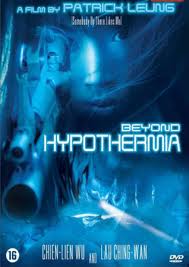
#1 Beyond Hypothermia aka Sip Si 32 Dou (1996) Hong Kong imdb Directed by Patrick Leung, Written by Roy Szeto, Produced by Johnnie To

Beyond Hypothermia British DVD Cover
Gateway Drug: Johnnie To and Ching Wan Lau

When I first saw Beyond Hypothermia, I was beginning to believe that there was no future in bullet ballet films after seeing too many filmmakers doing pale imitations of faded Xeroxes of imperfect clones of the John Woo template.

What Beyond Hypothermia did was completely subvert the formula by making the doomed romantic assassin character a woman.

Beyond this simple subversion, the film gave us brilliant set pieces that were not just great visuals but that revealed character. Like the bravura opening which effectively compared the cold-blooded assassin with the blocks of ice concealing the assassin and her weapons.

Or like the restaurant sequence when a flaming duck is ordered and its arrival is used both as a stunning film visual and as a distraction to allow a quick escape and as a hint of the flaming ruins of the plans that have been made and finally as a metaphor for the doomed thaw of the assassin's heart by Ching Wan Lau's Long Shek character.

The biggest complaint of the film (and to me its biggest strength) is the way that it "wastes" Ching Wan Lau. Long Shek is a slow, ineffectual noodle shop owner. Consistent with the way that the film has switched gender roles, Long Shek is just as ineffectual as a love interest as the female love interests are in the John Woo films.

The tension of the film comes from that performance. We keep waiting for Ching Wan Lau to become the hero, to assume the mantle of heroic cool of Chow Yun Fat and save the day. Of course, if he had saved the day, he would also have doomed the movie to mediocrity.

Beyond Hypothermia proved to me that while Ching Wan Lau would never be the cool hero that Chow Yun Fat was, he would be the actor that Chow Yun Fat could never be, playing morally complex, damaged characters who because of their flaws and failures were oddly even more heroic.

And it confirmed for me that any film that Johnnie To was involved in whether as a director or a producer was worth going out of my way to see.

*****

I have been studying the redonkulously big 2011 Fantasia catalogue, and hopefully in a couple of days, I will put up a list of the films that I am hoping to see.

Thursday, July 7, 2011

Fantasia: Best Discoveries at the Fantasia Film Festival Part One

Fantasia: Best Discoveries at the Fantasia Film Festival Part One


The 2011 Fantasia Film Festival announces their line-up TODAY - July 7th to be exact. Fantasia, is of course, my favourite film festival in the whole world... other than the one that pays my salary obviously.

Fantasia 2011

To mark their schedule announcement, I will try to put up a post a day this week about Fantasia, continuing today with some thoughts of my favourite discoveries from the festival...

This was originally supposed to go up yesterday until the universe swallowed up 10, 000 words and spat in my face like a great cosmic bully.

*****

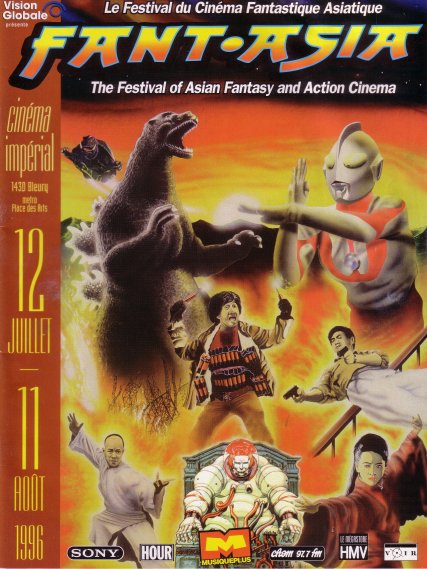
Original Fantasia Poster (1996)
Sound On Sight recently published a look at the early film announcements from this year's Fantasia Film Festival. While I was reading that, I snuck down the rabbit hole to read their four part series on the best films ever screened at the Fantasia Film Festival.

It struck me while reading that and agreeing with some choices (We Are What We Are), disagreeing on others (I loathe Ashes of Time to the core of my being - it is my worst Fantasia memory), agreeing on some even if we disagree a bit on the details (House of the Devil) and as with all film lists a few films that I feel were missing (hence this list of my own) and a few films that never even entered my radar (Love Exposure).

What this reinforces for me is that even more than most film festivals Fantasia is an elephant. Two different film lovers can experience two almost completely different festivals united only by a love for urgent, passionate genre film.

This was true even early in the history of Fantasia when all of the films played in one location - the Imperial Cinema and it was possible to buy a pass for all of Fantasia - only $60 the first year! Now with multiple cinemas playing films continuously, even an obsessive like Ricky from Sound on Sight can't see everything. And even two film fans who both watched the exact same films would walk away with different memories, different loves, different discoveries.

Fantasia's Current Downtown Home

For me, Fantasia has always been about discovery. I may not love every film at Fantasia, but I always love Fantasia. The festival has always played films from off the beaten track and every year they drag back some discovery that rocks my world.

What makes Fantasia different from most other film festivals, is that most film festivals play horses and sneer at zebras. The Fantasia programmers specialize in zebras, allowing them to spot the truly exceptional ones and sometimes coming back with a mythic creature that should not exist, a pegasus that takes us flying to places that we have never seen.

With that in mind, today and tomorrow, I will list my Top Ten discoveries from the Fantasia Film Festival. In many cases, these are films that acted as gateway drugs, introducing me to films from a particular producer, director, writer, actor or sometimes even a country.

*****

Honorable Mention
Fudoh: The New Generation aka Gokudô sengokushi: Fudô (1996) Japan imdb Directed by Takashi Miike, Written by Toshiyuki Morioka, based on the manga by Hitoshi Tanimura.

Fudoh: The New Generation Poster
Gateway Drug: Takashi Miike

A lot of genre films follow a formula. What makes a great genre film is a filmmaker who knows the formula, but subverts it - not just for the sheer pleasure of subversion, although that helps - but in order to reveal character and tell a more meaningful story.

Fudoh: The Next Generation is a generational mobster (Yakuza) story. There is nothing unusual about using a gangster film to talk about the conflicts between generations. What is different is the execution.

Or rather THE EXECUTION. The first thing that everyone talks about when they mention this film is the assassination of a perverted Yakuza lieutenant in a strip bar by one of the dancers with a blow gun and amazing control of her Kegel muscles.

Or to put it another way, imagine the ping pong ball sequence from Priscilla, Queen of the Desert used for murder.

It's lewd, it's unique, it's perverse, but most importantly it reveals the theme of the film. What gives the new generation an advantage over the old is that the previous generation are a bunch of perverts governed and weakened by their impulses. In most gangster films, the old generation has honour and the new generation is weaker because they have abandoned honour.

Miike abandons this trope, subverting it to criticize the decadence and perversion of Japanese society.

Fudoh: The New Generation and Miike only make honourable mention in part because I find Miike to be a incredibly mixed bag. For every Miike film that amazes me by its genius like Shangri-La, Dead or Alive: Hanzaisha or Sukiyaki Western Django, there are Miike films that make me feel like he created them just to be hot needles poked under my eyes like Audition, Visitor Q or The Man in White. And the films in between like Ichi the Killer test my limits even though they are ultimately worth the effort.

Every Miike film is a like spinning a roulette wheel and taking a chance.

*****

#10 The Calamari Wrestler aka Ika Resuraa (2004) Japan imdb Directed by Minoru Kawasaki, Written by Minoru Kawasaki and Masakazu Migita.

The Calamari Wrestler
Gateway Drug: Minoru Kawasaki

It's a Japanese film about a giant wrestling squid! How could I not see it? How could I not love it?

I am not certain if I saw the film before or after I announced the first Inter Species Wrestling match between the late Bamboo, the wrestling panda bear and Flip D. Berger the wrestling McJobber, but they both happened during the summer of 2004.

It's not just the combination of wrestling and animals wrestling which I am predisposed to love, The Calamari Wrestler is the third best wrestling film that I have ever seen - behind only Darren Aronofsky's The Wrestler and the great Korean wrestling comedy The Foul King.

The film's premise is ridiculous: Japanese wrestling champion Kan-Ichi Iwata dies, is reincarnated as a giant squid and comes back to the wrestling world to defeat his rival Koji Taguchi for the title and reclaim his girlfriend Miyako currently dating Taguchi.

The secret to the film's success is that it takes the melodrama perfectly seriously, even to the extent of honouring kayfabe and protecting wrestling's secrets. And it gets the wrestling right, telling the story better, with better execution than virtually all wrestling films.

Wrestling melodramas are inherently funny, you don't need to gild the lily by casting David Arquette. Giant animals wrestling are also inherently funny. When you combine the two, the more seriously, the more dead pan you treat the subject matter, the funnier that it will become.

Or to quote Mikhail Q. Rotch, the promoter of ISW, "Don't try to be funny. Just wrestle."

What makes The Calamari Wrestler a success - the ridiculous set-up, the melodrama played completely straight, the attention to detail are what make Kawasaki's other films a success. Like Rug Cop which plays the police melodrama completely straight for its hero who fights criminals by throwing his toupee at them like a hairy Frisbee. Or Executive Koala which plays its workplace thriller melodrama completely straight for its hero who is a giant Koala in a business suit.

Minoru Kawasaki's only real mis-step is his disaster film The World Sinks Except Japan which drifts into very ugly xenophobia.

*****

#9 Swiri (1999) South Korea imdb Directed and Written by Je-gyu Kang

Swiri Poster
Gateway Drug: Korean action films

What Swiri does is take the John Woo bullet ballet formula and adapt it to Korea, in the process adding extra resonance to the idea that the antagonist and the protagonist are mirrors of one another.

In this case, they are both foes and lovers. 

The South Korean security agent and the North Korean spy/assassin (like their countries) are trapped in a cycle of love and lies and mistrust.

Like their countries, they know each other, but completely misunderstand one another. 

I hear complaints about the special effects for this film and while I don't accept that they are inferior, I will argue to the death that this film's emotional effects make it an outstanding action film. It is the rare action film that wishes the heroic bloodshed were unnecessary while also understanding that the tragic action can not be avoided.

And this film paved the way for films with even more complex takes on the South Korea/North Korea divide like JSA.

*****

#8 Mulberry Street (2007) USA imdb Directed by Jim Mickle, Written by Nick Damici and Jim Mickle
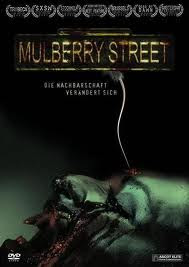
Mulberry Street
I have written about Mulberry Street before. I love this film. 

It takes a Katrina metaphor, entwines it within a parable about gentrification and the way that yuppification tears the soul out of neighbourhoods and wraps that within a retelling of the saga of Odysseus as the female soldier returning from Iraq finds nothing but monsters and natural disasters in her path as she tries to return home, finding the closer that she gets to the home that she left to defend, the less of it is left.

It is the rare horror film to treat each death as a tragedy, building sorrow upon sorrow leaving you shattered by the conclusion as much by grief as by fear.

Not just one of my favourite films that I have ever seen at the Festival, it is also symbolic to me of all the low budget independent films at Fantasia that replace Hollywood largesse with that most dangerous tool in a filmmaker's arsenal: a good idea.

Films like Cryptic for example.

*****

#7 Perfect Blue (1998) Japan imdb Directed by Satoshi Kon, Written by Sadayuki Murai, based on the novel by Yoshikazu Takeuchi

Perfect Blue Poster
Gateway Drug: Non-traditional anime

I saw Akira and loved it when it was first released and I am a huge fan of Hayao Miyazaki, but I was never an anime fanatic. It seemed to me that in much the same way that John Woo's imitators rarely came close to equalling his work and the more that they tried the worse they got, that the field of anime was filled with robots, giant robots and cyborgs, faded copies of bad tracings of imperfect clones of Akira.

Perfect Blue raised the bar for anime.

It is first of all a great psychological thriller. The backhanded compliment that it almost always gets is that it could have easily been a live action film, because it seems impossible that a cartoon could be that suspenseful, that morally complex, that (for want of a better word) adult.

It is also a great animated film, well-drawn and taking advantage of its medium to add depth and resonance to its main characters paranoia and (possible) hallucinations.

The shame of Perfect Blue is that it didn't really lead to a flood of films stretching the boundaries of what animated film could be. Millennium Actress by the same director is a fine follow-up, stretching the boundaries in a different way with an historical biography of a fictional actress that salutes the history of Japanese film, but films like that continue to be rare exceptions. 

In a way, the only creators to pick up the gauntlet thrown by Perfect Blue are Pixar. They still work within the confines of films intended for children, but they take incredible risks like Perfect Blue - expanding the definitions of what their films can be about and what forms they can take.

*****

#6 The Mission aka Cheung Fo (1999) Japan imdb Directed by Johnnie To, Written by Nai-Hoi Yau.

The Mission Poster
Gateway Drug: Johnnie To

The Mission is the film that convinced me that Johnnie To is the modern master of the inaction sequence.

The inaction sequence is a cinematic moment when the characters are frozen between life and death like Schrödinger's cat. Done properly it is a moment that builds tension because anything can happen... eventually.

Traditionally, the inaction sequence was seen in Western showdowns. The moment when the gunfighters face each other down, but before they draw their guns.

Akira Kurosawa introduced the idea in Seven Samurai that the showdown could end without an actual physical confrontation. That the confrontation could be resolved as a moment of intellectual rather than physical supremacy.

Sergio Leone added time and numbers to the mix, making the showdown a three-way in The Good, the Bad and the Ugly and making the showdowns last longer and longer without allowing the inherent tension to dissipate.

John Woo brought the showdown closer than anyone had ever dared to, making the face-off claustrophobically close both physically and emotionally.

Johnnie To took all of those elements and combined them - leading to tableaux filled with characters trapped in tiny invisible boxes for what seems like forever in moments that build tension upon tension until you are screaming for a resolution.

In The Mission the bravura moment happens when the team is trapped out in the open after-hours in a shopping mall while an invisible sniper stalks them. If they move, they will be shot and killed and fail their mission. If they stay, they will be temporarily safe, but will eventually be shot and killed and fail their mission.

The inaction sequence.

Ever since, I have been a fan of Johnnie To's singular genius whether as a producer (Expect the Unexpected) or a Director (A Good Man Dies which features an inaction sequence where one of the participants is actually dead)

*****

Continued Tomorrow Here.

Wednesday, July 6, 2011

Fantasia 2007: Viva

The 2011 Fantasia Film Festival announces their line-up this week - July 7th to be exact. Fantasia, is of course, my favourite film festival in the whole world... other than the one that pays my salary obviously.


To mark their schedule announcement, I will try to put up a post a day this week about Fantasia, continuing today with some thoughts of my favourite discoveries from the festival...

Or at least that was the plan until technology ate about 10, 000 words of my favourite discoveries at Fantasia, so instead, here is an unpublished review of a film from Fantasia 2007.

*****

Viva (2007) USA imdb Written and Directed by Anna Biller

I tend to be suspicious of the auteur label. My personal feeling is that film is a collaborative medium and the director's role is important, but not as much as some of the director's believe. 
Viva Poster

On the other hand, sometimes the shoe fits:

Anna Biller wrote, directed, produced, starred, designed the sets, designed the costumes, drew the obligatory animated hallucination sequence, wrote the music and played the organ on the soundtrack of Viva. It's not quite a one woman band, but close enough for government work.

The film is a loving tribute to and biting satire of the "nudie cuties" of Russ Meyer et al. It follows two 1970's Los Angeles suburban housewives brunette Barbi/Viva (Anna Biller) and blond Sheila/Candy (Bridget Brno) who, after being abandoned by their idiot husbands, decide to take advantage of the Sexual Revolution. In the process of following Barbi's journey, the film asks us what good all that freedom was if all it led to was women being used as sexual objects and in the case of Barbi being repeatedly drugged and raped.

The film has a campy veneer. Everything is on high volume. The sets are overly colourful, the costumes are exaggerated, the acting is so over the top that it plays not just to the cheap sets but to someone standing in the street outside the theatre. That said, unlike the films of the era, underneath the [Gizmo] Bright Light! Bright Light! [/Gizmo] sheen, there is real emotional depth and psychological complexity to the characters.

Theatrical Viva Poster
As an example, when Barbi tries to get a job as a model after being fired by her breast fondling boss for being married, and she is drugged by her gay hair-stylist so that he can seduce his hunky next-door neighbour who is deeply in lust with Barbi (it is that kind of film) Deep breath. Where was I? Right, so when Barbi gets back late after these adventures, her husband, who is never home, has landed himself in the hospital, because Barbi was not there waiting at the doorstep with a martini and slippers. Barbi's reaction is to take a bath, reapply her make-up and then get dressed as a nurse to visit him in the hospital.

Anna Biller described this behaviour after the movie as "passive-aggressive". I would go with borderline psychotic personally. Never mind the delay in rushing to her jerk husband's bed-side. Never mind getting dressed as a nurse to "nurse" your husband back to health. Who in the blue hell actually keeps a nurse outfit in the house for just such an occasion?

Admittedly, this does fulfill one of the tropes of the genre and Barbi getting dressed as a nurse is one of the most deeply erotic moments of the film in a way that her getting undressed later on is not. Your mileage may of course vary.

I should also mention that Anna did mount a spirited defence of her on-screen husband Rick (Chad England) 's behaviour during the Q&A after the film. She is right that in comparison to the other men in the film, Rick comes off pretty well. Great, he's not a sexually harassing rapist, he is just a neglectful idiot. I don't like him. No, Sam, I don't. Even if him being a neglectful idiot is the engine that drives Barbi becoming Viva and embarking on her adventures. In fact, given how badly those adventures turn out, I hate him even more.

(There may in fact be some jealousy involved here. I recognize that being jealous of a fictional character is borderline insane. I am trying to deal.)

I think the poster to the Justine mentioned
It should be said that there were nudie cuties of the time that had an equally pessimistic outlook on these journeys of sexual awakening. I seem to recall a British one of the period perhaps based around Candide in which the female star bounces from one sexual encounter to another while somehow clinging to her virginity before being rescued by a member of the British nobility who promptly deflowers and (I think) kills her on a beach.

[Edit] I may be thinking of an adaptation of De Sade's Justine come to think about it. [/Edit]

Bambi/Viva's fate is much less dire although the film makes good use of the striking irony that Viva's most powerful moment - her musical roar - takes place during an orgy right after she has been drugged and just before the proto-Roofies kick in so that her Bohemian artist boyfriend can take what will not be given freely. It also subverts Bambi's one pleasant sexual encounter of her quest, her (genre required) lesbian encounter with Agnes (Robbin Ryan) as Agnes stands back and watches as Bambi gets plowed over.

Her Musical Roar

Anna said that the Artist rapist was based on the rapist from Hitchcock's Frenzy. Personally, he reminded me of Micky Dolenz from The Monkees only evil. (Or is Micky Dolenz EVIL~ too? Can we get a ruling?)
It's not the artist that was based on the Frenzy character! It was the red-headed, older man who came to the apartment to rape Barbi. The artist was kind of a rocker, sort of Micky Dolenz, you're right! I was more thinking Mick Jagger, though.
-Anna Biller
The film benefits from the fact that virtually all of the women in the film, especially the leads, are naturally beautiful and look like they have actually had a sandwich in the last month, rather than the lettuce and watercress eating stick thin waifs that Hollywood normally gives us.

The film took four and a half years to make and it was obviously a labour of love. If I had to criticize it it would be based on the fact that at 120 minutes, the film could have probably have done with a ruthless edit by someone who was not as emotionally involved with the footage. On the other hand, while the film may meander a bit, the films that it is paying tribute to had a tendency to do that too, so I guess I can give the film a pass for being too faithful to its source material.

Tuesday, July 5, 2011

Fantasia 2007: The End of the Line and Mulberry Street

The 2011 Fantasia Film Festival announces their line-up this week - July 7th to be exact. Fantasia, is of course, my favourite film festival in the whole world... other than the one that pays my salary obviously.


To mark their schedule announcement, I will try to put up a post a day this week about Fantasia, continuing today with some reviews dating back to the 2007 Fantasia that I have never shared on this blog.

*****

End of the Line (2006) Canada imdb Directed and Written by Maurice Devereux,

End of the Line Poster
Compassionate Monsters

By the director of $la$her$ a film about a group of Americans trapped on a Japanese reality game show where the contestants are thrown into a warehouse with 3 serial killers and the survivors - if there are any - split one million dollars. I love the reality TV show turned horror sub-genre and $la$her$ is a particularly good example, so I was predisposed to liking End of the Line. But had I never seen $la$her$, I would still completely fucking love this picture. I [heart] this film. I want to hug it and squeeze it and call it George.

I am not, despite my cinematic hard-on for $la$her$, a huge fan of the gore. I gross-out easily, and scare even easier, so I have to steel myself to see a film like this and consequently I hold films like this to a higher standard than I do other films. If you are going to revolt me, if you are going to play the gore card, you had better have a compelling reason to play it.

This film's compelling reason: the dangers of religious fanaticism.

$la$herS Poster
There is certainly room for a movie about the dangers of Muslim religious fanaticism, but Devereux makes the allegory more immediate (and more universal) by tackling Christian fanaticism.

Have you ever sat down on a bus or a subway besides one of those polite, clean-cut religious missionaries, with their clean white shirts and perfectly creased black pants and their straight black tie and that spooky little black name tag with their name and rank? They are a little bit creepy aren't they? And isn't one of the reasons that they are a little scary, the fact that they have a rank - implying that they are organized like an army and that they take orders. ("Don't be insolent with me," barks one of the film's villains, "I outrank you!")

What if (asks End of the Line) they did get orders? What if their pagers or cell phones went off one day with an order? And what if that order was to kill everyone who was not a member of the Church?

(Just to be clear the religious fanatics of the film are NOT Mormons. The film gives us equally polite, equally well groomed, brown-shirt wearing members of a fictitious Christian faith.)

Made on a shoe-string budget, the film does not look it. The cast is universally excellent, and the film benefits from that most dangerous weapon in a writer's arsenal: a good idea. There is a sequence involving a dying battery in a flashlight that will haunt me for years.

(Misleading) End of the Line DVD Cover
The film takes place in the Montreal Subway system, "The Underground City", but in such a way that it could be a subway from any North American city. (A subway stop in Toronto was used in the film and the trains themselves are complete movie creations, so the film drapes a fictional cloak over the very real Montreal Metro, much the way that it drapes a fictional cloak over its religious zealots. The French signs seen in glimpses are a bit of a give-away though.)

Since the victims of the film are trapped deep underground, we are trapped with them in claustrophobic dead ends, and like the film's victims, we are uncertain whether this is an isolated phenomenon or, as the compassionate monsters of the film claim, part of a Universal Armageddon. Isolated and desperate, the well-drawn characters of the film have no choice. As another director at Fantasia, Jim Mickle of Mulberry Street said, "It's a Zombie movie. Zombies chase you and you run." This is as true of religious zombies as it is of the undead.

The film is paced like a Zombie film only the killers are all too human, and the film allows us to see the whole gamut of faith at work: the true believers, the doubters, the lapsed, those who joined to satisfy loved ones and those who merely profess belief. The worst of the fanatics is also in a weird way the most reassuring. "I am not sure if I really believe in this stuff, but I am trying to keep an open mind," he confesses to one of his victims. He is the worst of the villains, because he kills (and threatens rape) even though he does not believe that he is getting orders directly from God, but he is also a little reassuring because we can understand him, he is the traditional bad guy from hundreds of horror films. The rest of his tribe are a little harder to categorize.

My Favourite End of the Line Poster
Because they are very human monsters, you feel real anguish when these compassionate monsters are hurt or killed. They are not faceless undead. They are very real people with real doubts and real beliefs. And because they are neither drooling plague victims nor shambling undead, they get to articulate their point of view. Devereux allows room for doubt that they just might be right.

And that objectivity allows Deverux to give us the most horrible tableauxs. There is a beautiful, terrible, gory AWEFUL sequence in the middle of the film, one of such devastating emotional power that reportedly when they were colour correcting, the female technician got up at this sequence, declared that she had worked on Gapar Noe's Irreversible so she was not squeamish, but this was too much.

Bill Maher got into hot water and some suggest saw his successful talk show Politically Incorrect cancelled when he said (partially), "We have been the cowards lobbing cruise missiles from 2,000 miles away. That's cowardly. Staying in the airplane when it hits the building, say what you want about it, it's not cowardly. Stupid maybe, but not cowardly." What I think Bill Maher was trying to say is that calling these religious fanatics names may be satisfying, but if we lie to ourselves, we can not understand them. The truth is that the 9/11 hijackers may have been monsters, but they were also people, with fears, doubts and with courage. This does not make what they did better. It makes it worse.

Read it. One Day You'll Thank Me For It.
It would be so much easier if these were just faceless brainwashed monsters, drooling undead. What makes this film so God Damned terrifying is that the compassionate monsters truly believe that by killing those not of the church, that they are sending them straight to God, saving them from unbelievable anguish and torment in the final days.

I call them monsters, because what they do is monstrous. I call them compassionate, because they do what they do out of love.

From Sandman: Season of Mists by Neil Gaiman:
Remiel: "We will hurt you. And we are not sorry. But we do not do it to punish you, We do it to redeem you. Because afterward, you will be a better person. And because we love you. One day you'll thank us for it."

Damned Soul: "But... You don't understand... That makes it worse. That makes it so much worse."

Please understand, this is not some namby-pamby you might like this film review. This is a film I would go to the trenches for. If the only way to see this film is to crawl through barbed wire, start crawling. If I were a dog, I would hump this film's leg.

One final thought, just to close the loop...

Another $laSherS Poster
In Devereux' other great film $la$her$, you get the same interesting dynamic of vulnerable monsters.

As I mentioned above, $la$her$ is built around the conceit that you are watching the filming of a Japanese reality game show in which the contestants are locked in a warehouse with three serial killers. Any one who survives the taping splits one million dollars.

One of the gimmicks is that during commercial breaks, everyone has to freeze on the spot, held in place by an electro-shock collar. Just before one of these commercial breaks, Chainsaw Charlie is about to kill one of the contestants. During the commercial break, the killer taunts his victim, who coolly informs him that they will both die because rather than dying easily, they are both going over the edge of the catwalk that they are standing on onto the spikes below. The killer panics once he realizes that his intended victim is serious, even more so once he realizes that his collar holds him in place just as much as it does his intended victims.

Again, it is a moment that reinforces that the monsters of the film are human and vulnerable which makes their actions that much crueler.

*****


Mulberry Street (2007) USA imdb Directed by Jim Mickle, Written by Nick Damici and Jim Mickle


Mulberry Street Poster
Do not be scared away by the low budget, this film looks amazing. It was made by wizards who created the film with brains, sweat and their life's blood rather than money. While there are no actors that you would recognize as stars, the acting is universally excellent. I may be projecting here, but the cast feels like it was built out of the extras from Dick Wolf's Law and Order franchise and spin-offs. All of the actors have that vague aura of having been either the corpse that Lenny Briscoe throws the sheet over in the opening scene, or the partner of the cop that briefs Lenny - the one that does not get any lines.

The low budget probably helps the story in some ways, because it forced the film makers to tell their apocalyptic vision of New York island being over-run by plague rats and the rat zombies (or were-rats you pick) that result from the rat bites, by focusing on one New York neighbourhood (Mulberry Street) and one building on that street. Drama is heightened by compressing time and by compressing space. By tightening the screws on where the film takes place, we allow ourselves to extrapolate the destruction of this one neighbourhood, the destruction of this small world, into the destruction of the world entire.

The two main characters of the story are an aging boxer and his daughter who has just returned from Iraq.

The film borrows heavily from the film noir trope of the war veteran returning home from the war only to find that home no longer exists, or that if it does that it can no longer exist for him, because the veteran's scars both internal and external prevent him (or her) from making a real return.

Be it Ithica or Mulberry Street...
Really her journey is that of Odysseus, trying desperately to return home to her loved ones, battling both monsters and the geography that once welcomed her to return to a home that no longer exists as it did when she left it. She is betrayed just as Odysseus is betrayed, because having sacrificed for her country, she returns to find that she has no country.

The building that her father lives in is being yuppiefied, meaning that her neighbourhood is being destroyed as she returns. The film then takes the idea of this slow, gradual destruction of her neighbourhood and makes it literal as the rat zombies destroy the already doomed building and its inhabitants.

And you can see why she desperately wants to return, because her neighbourhood is the kind of place which accepts the scarred and the broken. Everyone in the building is an outcast, battling against some kind of handicap, from an over-the hill boxer to a single mother, from a moody and misunderstood teenager to a disabled WWII vet who needs oxygen to survive, from a man confined to a wheelchair to a man imprisoned in silence by his hearing and so on.

Mulberry Street DVD Cover
The building is also filled with veterans including the boxer, the wheelchair bound Vietnam vet and the World War Two veteran (ANZIO!) All veterans have been forgotten and betrayed by their country, so the film makes their dilemma a generational one - giving more depth to the problem.

(By the way, I am not suggesting that the black and gay character is a freak or suffering from a disability, but he does fall into the category of characters that are marginalized yet accepted by all the other outcasts.)

The only characters in the building that might qualify as not-outcasts are the Yuppie family who desert the building at the first sign of trouble, when all of the other outcasts rally together. In many zombie or apocalyptic films, the main characters inside are almost as much danger to themselves as the monsters outside. Not in this film. In this film, the characters are family who rally to each other's aid (except of course the Yuppie family who flee) which just makes their deaths as the rat-zombies pick off the members of the family one by one that much more tragic.

British Poster (and Title) for Mulberry Street
I have had horror films scare me before. I have had horror films make me think. I have had them make me angry. This film does all of these things, but it does something more - it made me cry, because you are connected to these characters and you do not want them to die. And every death diminishes not just the audience, but the characters who are left as well, as the rat zombies destroy their neighbourhood, piece by piece and brick by brick. Its the destruction of a family and a neighbourhood made more real and more precious because its members choose each other.

In most horror films, the building's janitor would be a stereotyped villain - in the pockets of the developer - but instead, he is a member of the community, ribbed good-naturedly by his neighbours for the building's disintegrating infrastructure, but also making the necessary repairs as quickly as he can in a losing race as the building disintegrates faster than he can repair it. (And tellingly, he is bitten trying to make repairs.) He is one of the early victims of the plague, but also tellingly, when he attacks his neighbours, they choose to lock him up rather than kill him.

The film also makes good use of the idea that in a disaster the media and the government are of little help as the characters (and the audience) get their information in dribs and drabs and that information is frequently incorrect or useless. (No points for guessing that the film makers gets a lot of mileage from the Katrina comparison.)

I guess I probably love End of the Line ever so (just a rat-hair smidgen) slightly more than this film, because it is a film from my neighbourhood, with characters that I recognize and a problem that I worry about. I am not however saying that Mulberry Street is a film that can only be appreciated by those who live near that street. Because it is so specific, it achieves a level of universality.

Again, you NEED to see this film.